


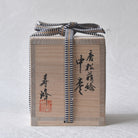
Karamatsu Maki-e Nakanatsume by Juho Wada – Lacquer Matcha Caddy
受取を利用可能か読み込めませんでした
Karamatsu Nakanatsume by Juho Wada
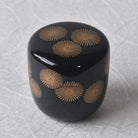
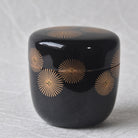
An elegant Japanese Nakanatsume (中棗) by lacquer artist Juho Wada (和田寿峰), featuring a refined Karamatsu (唐松 / Japanese larch) motif.
The Karamatsu design is distinguished by the graceful rhythm of its radiating needles and delicate branches, creating a pattern that feels both traditional and remarkably modern. Its clean, geometric quality brings a quiet sophistication to the lacquered surface.
Trees of the pine family have long been associated in Japanese culture with longevity, resilience, and enduring vitality, making tree motifs particularly well suited to auspicious and celebratory settings.
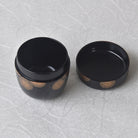
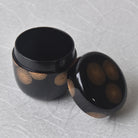
The Nakanatsume is a classic, well-balanced form of chaki used to hold matcha for the preparation of usucha (thin tea). Its versatile proportions and refined decoration make it easy to coordinate with a wide variety of chawan and other tea utensils.
Created by Juho Wada, this piece combines traditional Japanese lacquer craftsmanship with the elegant natural form of Karamatsu. Its restrained design makes it a beautiful choice for Chakai, seasonal tea gatherings, or as part of a collection of fine Japanese lacquerware.
Details
- Artist: Juho Wada (和田寿峰)
- Type: Nakanatsume (中棗)
- Motif: Karamatsu (唐松) – Japanese Larch
- Chaki / Matcha Tea Caddy
- For Usucha
- Made in Japan
About Yamanaka Lacquerware
Yamanaka Lacquerware (Yamanaka Shikki) is a traditional Japanese craft produced in Yamanaka Onsen, Kaga City, Ishikawa Prefecture, with a history spanning approximately 450 years.
It is especially renowned for its exceptional woodturning techniques. Skilled artisans carefully turn each piece to create beautifully balanced, lightweight forms while preserving the natural character and grain of the wood. The surface is then finished with carefully applied layers of lacquer, and some pieces are further embellished with traditional decorative techniques such as maki-e, using gold or silver powders.
Yamanaka lacquerware is highly regarded for its combination of precision, lightness, durability, and understated elegance. Its natsume and other utensils for Chanoyu reflect generations of specialized craftsmanship, bringing together practical function and refined Japanese aesthetics.
About Natsume
A natsume (棗) is a traditional Japanese chaki (茶器), or matcha tea caddy, used to hold matcha during the preparation of usucha (thin tea) in Chanoyu.
Its name comes from its resemblance to the fruit of the natsume, or jujube tree. Over the centuries, the natsume has become one of the most recognizable and important lacquer utensils in the Japanese tea tradition.
Beyond its practical role, a natsume is an important part of the aesthetic composition of a tea gathering. Its form, lacquer finish, decorative technique, and seasonal motif are thoughtfully selected in harmony with the chawan, chashaku, and other utensils.
A finely crafted natsume is therefore more than simply a container for matcha—it is an integral part of the beauty, seasonality, and artistic expression of Chanoyu.